Artist Interview: Ali Saneei
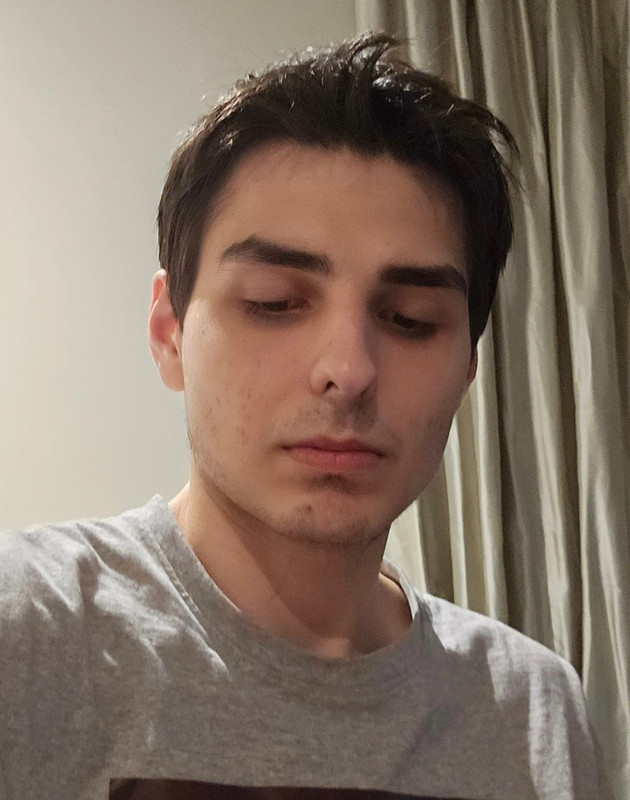
In this exclusive conversation, we sit down with multidisciplinary artist Ali Saneei to explore the raw, experimental world of his music. Known for his "stream-of-consciousness" recording style and his work in both the indie game scene and standalone alternative music, Saneei opens up about the vulnerability of "outsider music," the technical challenges of unscripted composition, and his ambitious upcoming projects for 2026.
Tori: Your music is often described as being in the underground and alternative genres. How do you feel these labels capture the essence of your sound, and what musical boundaries are you most interested in pushing within those spaces?
Ali: I feel they are accurate labels because a big challenge with my music is that it’s hard to say what genre it exactly is. Underground, alternative, lo-fi, and even indie genres are broad enough to include the “weird” and unconventional songs I make, while almost specific enough to quickly convey the overall style to someone who has never heard my music. The only genre that I've found to be the most specific and accurate for my work is “outsider music.” However, I use it a bit less these days because I feel it may give the perception that my work shouldn't be taken that seriously. Plus, most people likely don’t know what the genre refers to as it’s not super well-known. So, as much as I love it as a genre and concept, I do feel a bit torn about using it too much.
In terms of pushing boundaries within them, I think these are all genres that offer a lot of freedom and don't have specific and limiting boundaries (compared to mainstream genres). Especially in the case of outsider music, which is all about being weird and unconventional. Having said that, I often play around a lot with the idea of what a song should be (using long lengths, odd song structures, etc.), and I've gotten this feedback a few times that they are not what an average listener expects from a song. If I get the honor for my work to be called “boundary-pushing", I would say it mainly comes from experimentation and also, rejecting the “rules” of music.
Tori: You create both music for your video games (soundtracks) and standalone releases (singles, EPs, albums). How does your mindset or creative approach shift when composing music intended to support a game's narrative versus music intended to stand on its own?
Ali: I can confidently say that they require very different mindsets. I feel very different when I'm working on a video game soundtrack versus a standalone release. The biggest difference is that the music for games is made within more pre-defined constraints, and even though it still can technically be experimental, as you mentioned, it ultimately has to support that specific game's narrative (or just gameplay and moods, if it's not story-driven). And the second big difference is that game soundtracks are usually required to be very “loopable” and, depending on the game, adaptively change based on real-time player behavior. On the other hand, when I'm working on a standalone release, I don't have these limitations and can just do whatever I want.
Tori: Looking across your discography, what common musical elements—be it a specific instrument, melodic pattern, or harmonic structure—act as a signature thread that ties all your varied works together?
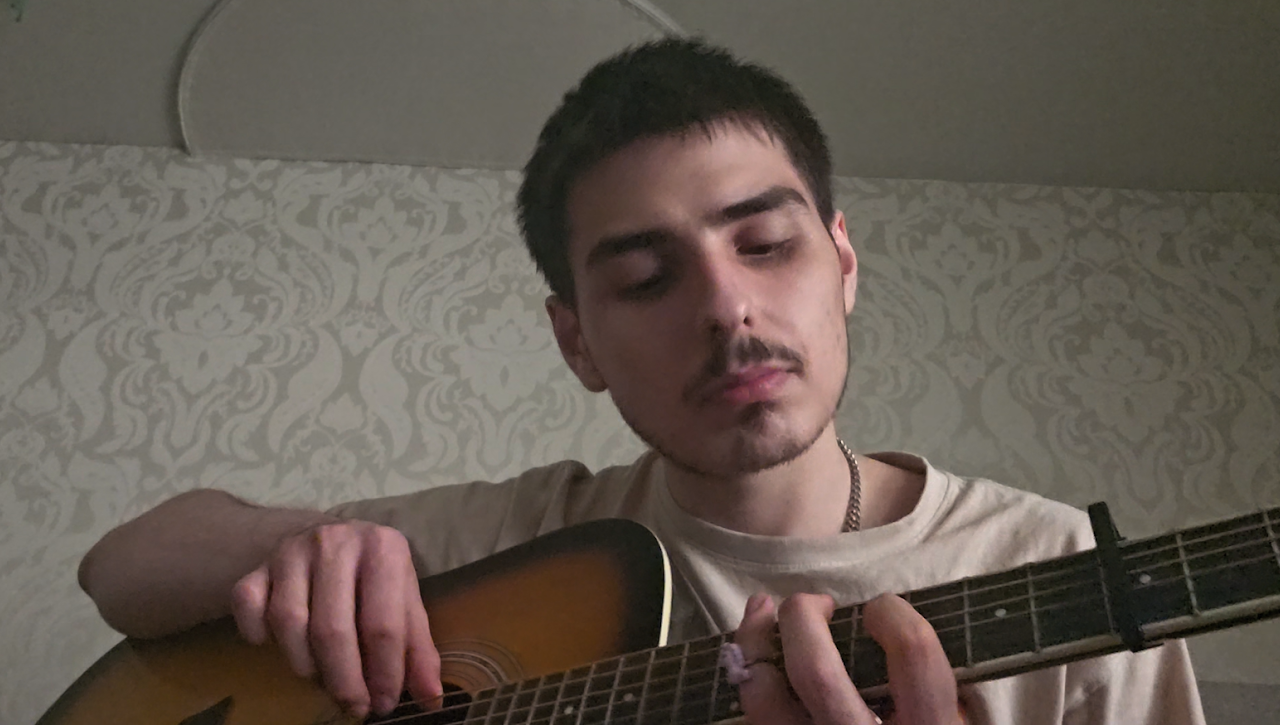
Ali: I think my use of acoustic guitar is definitely something that can act as a signature thread across my releases. It's my main instrument, and in many of the songs, it's the only one. But other than that, there are also a lot more elements that tie them together. From dealing with odd and sometimes taboo subjects, to a sense of deep melancholy that can be felt in most of them. These connections are things I intend to have as I'm trying to build a digital world with them. An imaginary universe full of rare and different stories, made for anyone who is looking for something different in art.
Tori: If a listener were completely new to your music, which single track or album would you recommend they start with to immediately grasp your artistic identity, and why that specific piece?
Ali: I would definitely choose something that's short and not intense or challenging, because I do have a lot of those kinds of songs as well. To a completely new listener, I would recommend the single track “Worries,“ as it passes all those criteria and was also fully made in stream-of-consciousness (the main style I use to record). It's also one of my own favorites too, and can be very relatable to many due to what it’s expressing.
Tori: Your use of the "stream-of-consciousness" approach is central to your work. Can you walk us through the raw initial moments of a song created this way? Do you begin with lyrics, a melody, or a feeling?
Ali: These songs always start with an intense feeling that I need to express. So, I just grab my guitar and then start recording immediately. When I do this, the melody and lyrics just happen themselves in real-time. That's really how it works for me, and as weird as it may seem, it is the real creation process behind many of my songs such as “Worries” and “Trauma.”
I should mention that recording this way is of course not that easy and has its own challenges. Because I can’t technically “practice” these songs beforehand in the traditional sense (as they don’t exist before recording), I always have to keep improving my musical skills and techniques, so I can use them when needed during recording. My stream-of-consciousness songs are always single continuous takes that happen without a pause. They are kind of the musical equivalent of unscripted one-shot filmmaking. Super risky, weird, and crazy. I know, haha. So, I try to be open to anything that happens in that time and embrace the imperfections as part of the art. Nevertheless, they always do go through post-production before being released, where I deeply listen to them and decide whether to cut any parts or make any changes. Depending on the song, I also add interesting and relevant audio effects to some sections.
Tori: The goal of this process is expressing real and honest emotions. When you listen back to a track composed this way, how do you balance the raw, authentic emotion with the necessary task of arranging, mixing, and mastering for a professional release?
Ali: When I record a song in stream-of-consciousness, it won't go through a conventional production and post-production like normal songs, as it's already bypassing many steps (writing, arranging, and most of the time, mixing). Instead, I go through a different set of steps. Generally in post-production, I take the recorded file into my DAW to improve the quality as much as possible. This can include increasing the volume, cutting some parts, adding audio effects, and mastering. My goal here is to avoid changing it too much to the point it loses its power, but change it enough so it sounds as best as I can possibly make it. I believe because the music recorded this way is already unconventional, the post-production should not attempt to erase that, but rather build on top of it. Overall, it's a fully DIY process for me that I refine over time as I learn more about music production.
Tori: In the context of music, what does it mean for you to express emotion in an unconventional and innovative way? Does this refer to the lyrics, the song structure, the instrumentation, or all three?
Ali: It largely depends on the song, but I think all of those can be a part of this. In terms of being unconventional, I really don't need to force it in any aspects as it's always already like that, haha. But for them to be innovative, I have to be open to new experiments and ideas, and then try to implement them into the lyrics, song structure, instrumentation, and other parts. This definitely needs some conscious effort for sure, but I also try not to force it and instead, let each song become what it needs to be.
Tori: Do you ever find that the stream-of-consciousness process creates something unexpected or even uncomfortable? How do you decide whether to publish a piece that is intensely raw or perhaps incomplete by conventional standards?
Ali: Yes, almost all the time. But I would say that's kind of the goal, as what makes this method so interesting is that it can create unexpected and uncomfortable songs in a way that a heavily produced process can't. In terms of deciding whether to publish a song made this way, it's something I think about a lot. The main part of this decision happens during those deep listens in post-production, which I mentioned previously. So, if I listen to a song after and decide that I can’t publish it for any reason, I just won’t. As painful as that can feel. But in general, I publish the songs that I consider “good enough” and feel have something valuable and interesting to say. This is specifically in the context of single tracks, as the process for my concept albums / EPs is usually a bit different (though they also follow similar standards).
Tori: Concept projects like The Perfect Product of Neuroticism and My True Self appear to tell deep, vulnerable stories. What draws you to the concept album/EP format as a vessel for complex personal narratives?
Ali: I see the concept album / EP format as a very powerful way to tell a story. While it’s usual for an album to just be a collection of somewhat related songs that don’t tell a specific story, a concept album is where musical storytelling reaches its full potential. It happens when you have a bigger vision in mind and then design every single decision in each song so they all align with what you want to say. I do like to make normal albums in the future too, but I find concept albums / EPs too powerful as a storytelling medium to just leave them yet.
Tori: The Perfect Product of Neuroticism is noted as a sequel to My True Self. How do you maintain a cohesive non-linear narrative across multiple releases, and how much is planned versus discovered during the composition?
Ali: For me, maintaining a cohesive narrative across multiple releases includes both planning beforehand and discovering things over time. In the specific case of those albums, most of the story was planned in advance and some of it was discovered as I went. Those two albums are actually part of a trilogy, which also includes my 2024 EP The Hate Trilogy (which was named this because it includes 3 songs). Despite that being released earlier, the story starts from My True Self, and after its final track, the listener has the choice to either go to The Hate Trilogy or The Perfect Product of Neuroticism; with each of them offering completely different continuations and emotional experiences. This non-linear structure is an element I borrowed from my experience in game development, which I think added a unique aspect to that trilogy.
Tori: You mention your music is created using a variety of electronic and prepared elements (as noted in The Perfect Product of Neuroticism), contrasting your stream-of-consciousness approach. What creative liberation or restraint does a fully pre-planned, electronic-heavy album offer you?
Ali: That album was my first serious attempt at creating a pre-planned album unrelated to game soundtracks. So, as you mentioned, it wasn't stream-of-consciousness. I would say the two methods are very different, which is why I would like to see them as tools, not methods that cage me creatively. I want to be able to move between them fluidly based on the project and what I'm trying to do. So, I intentionally choose whichever method that is more impactful for what I'm trying to say.
But to specifically answer the question, a fully pre-planned method also comes with its own pros and cons. It offers a distinct creative liberation because I can iterate on and think through everything as much as needed beforehand. But at the same time, it can be restrictive too as self-censorship is very easy there. Nevertheless, it's worth noting that there's usually some overlap between them too. For example, the lyrics of that album still feel very raw and honest, despite going through countless revisions and rewrites. Similarly for the stream-of-consciousness songs, self-censorship still does happen there in real-time, despite not having the ability to think through things.
Tori: You are a multidisciplinary artist. Which poets or visual artists have had the most direct, tangible influence on the sound or lyrical texture of your music?
Ali: There's a lot of artists across different mediums that I love and admire, so I can’t unfortunately name them all. But the artist that really inspired me from the beginning and gave me the courage to start releasing my own weird music and art was Daniel Johnston. He was a very inspiring outsider musician and visual artist who created his own unique world using his authentic music and colorful drawings. There's something magical about his work and prolific artistic life that always inspires me to create more and more. So, he definitely has had a direct, tangible influence on me.
Tori: If you were given unlimited creative freedom and budget for your next music video, what concept would you pursue to visually represent the thematic density of your music?
Ali: Interesting question because I actually don't have any music videos to this date, haha. But if I had unlimited creative freedom and budget, I think I would use the opportunity to make a visual concept album where all the songs have distinct but connected music videos. A project that blurs the line of film and music video and experiments with new things. It would be very cool as it’d perfectly build upon what I’ve made so far. But only if unlimited creative freedom and budget were real things!
Tori: What do you hope a listener ultimately takes away from a concept album experience? Is the goal empathy, understanding, or simply witnessing a vulnerable journey?
Ali: I mainly want my listeners to have a new musical and emotional experience unlike anything they've heard before. But creating empathy and understanding could be possible side effects of this as well.
Tori: What are your musical ambitions for the next two years? Are there any genres or collaborators you hope to explore that would be a complete departure from your current style?
Ali: Because my plan is to release a new album each year, the next two years will also have their own unique and new ones. I'm currently working on several new concept album ideas at the time, with one of them being scheduled for a release sometime in 2026. It's still very early in development, but it's called Nostalgia Dreams, a 9-track concept album about trying to find the forgotten joys of childhood while being stuck in the depressing world of adulthood. It's a complete departure from The Perfect Product of Neuroticism and includes lighter and shorter songs that tell this story with a subtle layer of melancholy on top. If that album was about a descent into darkness, this one is about an ascent into the sky. So, I'm very excited about this as I’m still writing the lyrics (like that album, this one is also not stream-of-consciousness).
Another big project that will be released in the future, which I’m announcing publicly in this interview for the first time, is a short animated YouTube series currently titled Repression Wood that tells a surreal and dreamy story about the rise and fall of a fictional edgy singer. I call it my first “multidisciplinary project” because it requires many different creative skills that I should acquire or improve. Its relation to my music is that because the main character is that singer, I'm planning an original soundtrack album for it that will include new songs that I will write and sing myself. Basically, it's a solo project and I'm doing everything. So, I'm trying to keep the scope small while being super ambitious at the same time, haha. Can't wait to share more about it as it makes more progress (this one is also early in the making)!
And finally, I have some other on-going projects too across different disciplines. I have a bilingual poetry book in the works called Audienceless, which is a collection of 21 hand-selected English poems, each one with a crafted Persian translation (my native language) by Roya Abolhassani; a great poet who collaborates with me on the project. I write and post my poetry on X and Threads very consistently, so this is a huge step for me to make it official. Additionally, there’s also an experimental documentary film that I’m making called Unleash!, which is about the process behind my art with a focus on my music and stream-of-consciousness songs. While I’m a little overwhelmed and find it challenging to move them all forward, I’m more than excited for these all to come into fruition. My ambitious goal is to have all of them released by the end of 2026. So, we’ll see what happens! I encourage anyone who is interested about any of them to follow me on social media platforms, where I actively give updates about them plus a lot more.


Comments
Post a Comment