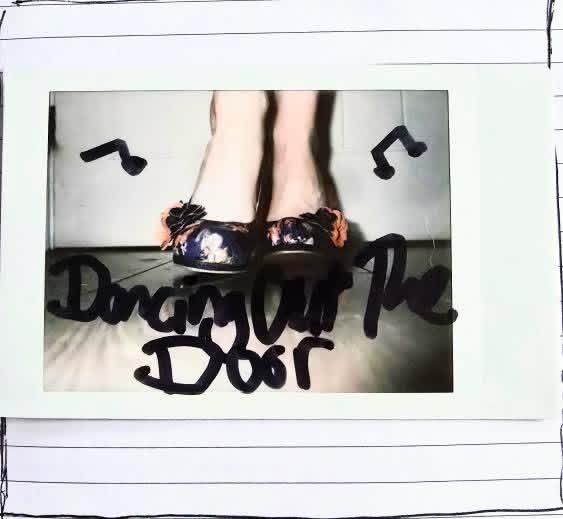
Single Review: Dancing Out The Door by Kristie Gregory
Kristie Gregory’s Dancing Out the Door is a lyrical celebration of self-liberation, resilience, and the quiet power of moving forward. Stripped of musical arrangement, the words stand firmly on their own as a poetic declaration of transformation—simple in structure, but profound in emotional weight.
The opening lines—
"The sun is blazing / Like my smile / I'm feeling amazing / The first time in a while"
immediately establish a turning point. The simile of the sun mirrors inner joy, suggesting that this happiness isn’t fleeting or performative, but radiant and visible to the world. The admission that it’s the “first time in a while” adds depth; this isn’t just a good day, it’s a breakthrough after a period of struggle or stagnation.
The repeated imperative to "keep moving" acts as both a physical and emotional directive. It’s not about escaping, but progressing—choosing motion over inertia, agency over resignation.
In the chorus, the central metaphor—"dancing out the door"—becomes a powerful image of agency and joy in departure. Unlike songs that frame leaving as sorrowful or conflicted, Gregory frames it as rhythmic, intentional, and celebratory.
"I'm not the same person / As I was before"
isn’t just a statement of change—it’s an affirmation. The repetition of “dancing” reinforces that this transformation is embodied, not just intellectual. The act of dancing becomes resistance to gravity, grief, or guilt that might otherwise weigh someone down.
The second verse sharpens the resolve:
"I can smell it / My destination / Nothing can quell it / My determination."
Here, the senses take over—smell, motion, instinct. The destination isn’t fully described, nor does it need to be. Its clarity lies in the feeling it evokes. The word “quell” (though possibly intended as “quench”) still works poetically—nothing can suppress this drive. There’s urgency in *"No time for thinking,"* suggesting that over-analysis could derail momentum. Sometimes, the heart knows before the mind catches up.
The bridge offers the song’s most reflective moment:
"Objects in the rear view mirror / Appear further away / That’s why I can’t stay / Can’t look back."
This reimagines the familiar phrase not as a warning, but as an explanation. Distance isn’t just physical—it’s emotional and psychological. The past appears smaller not because it wasn’t significant, but because staying would mean shrinking oneself. To look back would distort the truth of how far she’s come. So she doesn’t.
The final chorus lands with even greater weight after this reflection. There’s no hesitation, no doubt—only the reaffirmation of movement, rhythm, and self-possession.
At its core, the song’s lyrics are a testament to the courage it takes to honor one’s own growth. It doesn’t dwell on what’s being left behind, nor does it ask for permission to leave. Instead, it chooses joy as an act of defiance, and dancing as a form of truth-telling.
Dancing Out the Door is a quiet revolution in verse form—proof that sometimes the most powerful statements are made not with anger or accusation, but with a smile, a step, and a song.


Comments
Post a Comment