Artist Interview: Saint Friday
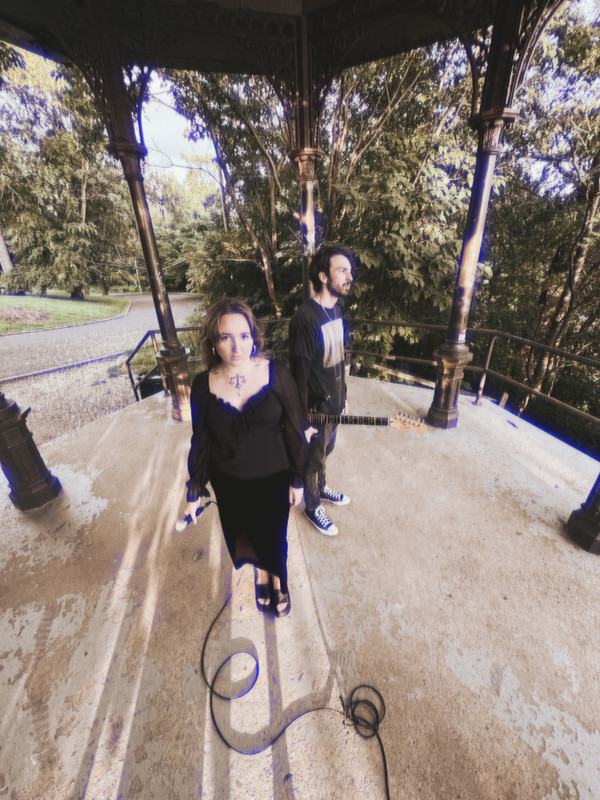
Saint Friday is a Philadelphia-based sibling duo consisting of Helen and Johnny. Their music occupies a unique niche known as "bubble grunge," where they masterfully juxtapose heavy, distorted guitars with ethereal, floaty vocals. Drawing from 90s alternative nostalgia and the vibrant DIY scene of their hometown, the pair creates a sound that is both hauntingly vulnerable and grittily energetic. In this interview, they discuss the family dynamics behind their creative process, the stories that shaped their debut EP, and what fans can expect from their upcoming release show.
Tori: Saint Friday’s music lives in the space between grit and vulnerability. How do you balance those two emotions in your songwriting and performances?
Helen: I think it’s easy to balance grit and vulnerability because the two emotions exist within each other–it takes grit to be vulnerable, to say something that you’re feeling, or something that might be disturbing to others.
Johnny: I think the best artists are the ones who know how to balance and juxtapose the two emotions. We try to personify this kind of chaos to life in our songs with a plethora of contrasting elements: soft, floating vocal Melodie’s contrasting with dry, haunting lyrics, distorted, soaring electric guitars blended with warm acoustic layers, and overall feeling of energetic nostalgia that leaves you with mixed feelings.
Tori: As a sibling duo, how does your family dynamic influence your creative process and the energy of your music?
Helen: Being siblings helps us have a certain level of trust and confidence in each other. We grew up learning and playing music together, we know each other’s abilities and strengths. There’s a deeper level of understanding because we’re siblings. I feel like I can take an idea of Johnny’s and expand on it because I know what he’s trying to get at, and he can do the same with me. I think that’s only really the case because we know each other so well.
Johnny: Being siblings plays a huge part in our creative process because we grew up listening to music, and playing together. We each have our own lives and we have our own experiences and tastes as well, but we’ve always bounced stuff off each other and shared music with each other. We can also be very honest and understanding with each other because we have that level of trust.
Tori: Your sound blends distorted guitars with vocals that are both comforting and painful. What inspired this distinctive contrast?
Helen: I think that’s an element that’s present in a lot of other female-fronted alternative bands that we love, so we took inspiration from them for sure. I like the idea of contrasting floating, ethereal (i.e. more “feminine”) vocals with the heavier, grungier guitars because it kind of shows that it’s possible for a softer voice to coexist within this genre of music–and it’s not only possible, but the combination creates something really memorable. A lot of mainstream alternative rock features male-centric, all-male bands, so I like the idea of not sacrificing a stereotypical feminine vocal style for the music style we want.
Johnny: We took a lot of inspiration from other bands in our niche, as well as elements from other influences to blend them into something that is kind of our own unique sound. This kind of contrast is present in a lot of bubble grunge bands and is a big part of our overall sound and something we constantly keep in mind.
Tori: You draw from 90’s alternative nostalgia while creating something fresh. Which elements from that era resonate most with you, and how do you make them your own?
Saint Friday: One main element of 90’s alt-rock that we implement into our songs is the grungy, distorted guitar tones. There’s a line to tread with nostalgia because you want to make something fresh, but also recognizable that people can relate to. We try to implement enough elements of our influences while also carving out our own niche by adding other elements from other genres/eras we draw from.
Tori: Can you walk us through the story behind your band name, Saint Friday? What does it represent for you?
Saint Friday: Our grandfather is from a small neighborhood in Athens, Greece, called Agia Paraskevi, which translates to Saint Friday. When we were thinking of band names, we thought it would be cool to somehow incorporate our shared family history as siblings. We had a few different ideas floating relating to Philly or even to our hometown, but then we mutually landed on Saint Friday and felt like it worked perfectly for what we wanted.
Tori: How have your personal experiences shaped the themes and emotions in your debut EP?
Helen: Speaking for myself, the song from our EP that I feel most personally connected to is the final song, “Faking”. This song is about having someone in your life who you feel like you’re constantly having to perform for, putting on a front because you don’t want to show them the real you. Whether this person is a friend, a parent, or a significant other, something has happened which makes it so that they can’t be trusted. We wrote this song in one go, and the flow felt really natural. For me, writing this song, and performing it, feels really cathartic because I’m able to be honest in a different, more discreet way. It’s like I’m giving the finger to the person who has no idea this song is inspired by them. In the end, we’ve certainly used our imagination when it comes to songwriting, and I’m just as proud of those songs, but using my own personal experience makes the whole thing more satisfying.
Johnny: On this EP, we wanted to write about real emotions, real feelings, and real life. Songwriting is about using different forms of storytelling to paint the picture that creates those feelings so we had fun telling stories and creating characters that we related to within those stories. Some of the songs are definitely autobiographical or based on real experiences.
Tori: What was the most challenging part of recording your debut EP, and what did you learn from that experience?
Helen: Since this was my first time ever recording in a studio, everything was its own new challenge. Mostly it was impostor syndrome and feeling like I had no idea what I was doing, but it also felt super strange singing into the mic in such an enclosed space. I’m used to singing alone on a stage and being able to move around and use my body. I walk around, move my head, and gesture a lot with my arms while singing, and that physicality is just part of singing for me. While in the recording process, I said a lot that it felt like learning how to sing completely differently because I was physically limited in my body, so I had to try much harder to sound just as strong while standing pretty still. That was definitely a hard thing for me.
Johnny: One challenge about writing our debut EP was finding what our sound was going to be. We spent a lot of time, months, just talking and envisioning what we wanted our band to sound and look like, sending music back and forth, writing demos. Being patient is another challenge on its own!
Tori: Your music has been described as cathartic and haunting. How do you hope listeners feel or think when they hear your songs?
Helen: I would hope that people find something they can relate to, something they can draw back to something in their own lives. I think the emotions we draw on are pretty universal, so that’s the idea. It’s cool to imagine someone hearing one of our songs on a random playlist and stopping whatever they’re doing just to focus on the music. Also, I know I love to notice subtle musical aspects when I’m listening to certain songs, so I’d love to hear if someone picked up on a quieter harmony in one of our songs and always sings that harmony instead of the melody. That’s what I do when I’m singing a song I really know inside and out.
Johnny: We often write lyrics that could have multiple interpretations, for each listener to draw their own conclusions. I like the idea of everyone who listens to the songs taking their own meaning from it depending on their own experiences.
Tori: You’ve cited influences like Slow Pulp, Momma, Rocket, and Alvvays. How have these artists shaped your sound and approach to music?
Helen: These bands have hugely influenced our music. Again, we pretty much exclusively looked to bands with female vocalists when we were trying to figure out what we wanted our sound to be. The genre of “bubble grunge”, which is pretty niche, is where we feel like our music lands. It’s a more specific sound than other indie or alternative rock. Those bands like Momma and Rocket helped us gain musical and vocal inspiration, and led us in the direction we wanted to go in. It was like we found these artists and had a kind of “aha” moment of recognition, so they’ve definitely been a big influence.
Johnny: These bands are some of my favorites and I listen to them every day, so they influence me and my songwriting in a huge way. We found our songs and our sound was falling into this bubble grunge vibe, so we started doubling down on it and looking to them more for inspiration for our recordings, writing, and even photo shoots, artwork, and other creative decisions besides the music. It’s good to have a target to aim for, while always creating a unique twist.
Tori: What role does Philadelphia’s music scene play in your identity as a band?
Helen: Philly is an awesome city for music because there's such a big variety of bands and artists, and it’s pretty concentrated because Philly isn’t that big. In that way, it feels like everyone knows everyone in the indie/alternative Philly scene. Everyone here is so open, creative, and supportive, and that’s what makes Philly a uniquely great place to make music.
Johnny: Philadelphia’s music scene has played a massive role in our band’s identity. There are so many different genres in Philly, an extremely vibrant DIY/house show scene, we get small/mid/large level touring acts, and we have small/mid/large sized venues. We really are so lucky to be able to call Philly home and draw inspiration from so many amazing bands we’ve seen here.
Tori: How do you approach songwriting as a duo? Is it a collaborative effort from the start, or do you bring individual ideas to the table?
Helen: Usually Johnny has come up with an instrumental idea already, then we work together on vocal melodies and lyrics. It’s a lot of back and forth and exchange of ideas until we land on what clicks, what we like best.
Johnny: Our writing sessions are super collaborative: workshopping melodies and drafting lyrics, bouncing ideas off each other. We usually record everything into a mixed session so we can hear in real time how the vocals will sit in the instrumental with the layers and effects, which we’ve found makes a huge difference for when we go into the studio.
Tori: Your release show is set for February 28th at Underground Arts. What can fans expect from your live performance?
Helen: Fans can expect a high-energy set that flows nonstop from beginning to end. We want to have a mutually beneficial exchange between us and the audience, where they will obviously feed off our energy, but also where we can gain energy from what they bring. Fans should come ready to move and jump around, whether they know the words or not.
Johnny: At our Underground Arts show February 28th, our fans can expect a full band line up, a setlist including all 4 songs from the EP, 2 brand new, unreleased originals, and a cover from one of our favorite bands, as well as the first ever Saint Friday merch.
Tori: Looking ahead, what themes or sounds are you excited to explore in your future projects?
Helen: I’m excited to further explore the dichotomy in our heavier lyrical themes and light vocals. I love songs whose voices and instrumentals don’t “match” the mood of the lyrics. I especially love it in our songs and others, where the lyrics are quite dark, but the songs are in a major key and the vocals are softer, instead of being distorted and abrasive like the lyrics might suggest they would be. I want to widen that gap even more, make the lyrics darker and make my vocals even more floaty.
Johnny: I think we’ll continue to go deeper into our sound, and discover what that sound is. We like to write about conflicting emotions or contradicting feelings, so we’ll probably go more extreme with that idea.
Tori: How do you navigate the balance between staying true to your artistic vision and connecting with a wider audience?
Helen: I think that displaying authenticity and individuality in our music will be the thing that ultimately connects us with our audience. It’s easy to distinguish between a song that probably had a roomful of producers write it, and a song that was actually written by the people performing it, drawing on personal experience and inspirations. It’s that distinction that sticks in people’s minds, what makes them actually connect with the artist behind the music.
Johnny: Helen said it greatly. We’re looking for the people who are looking for us. Seeing bands in our niche grow steadily in the past few years lets us know that there is an audience for this type of music too.
Tori: Finally, what message or feeling do you want to leave with people who listen to Saint Friday for the first time?
Saint Friday: We want first time listeners to feel what we feel when we hear a new band, excitement to hear something new and dive into their sound. We love finding new bands, checking out all the music they’ve released, being there for new releases, seeing them live on tour etc. We hope listeners connect with our music and are as excited to be a part of our journey as we are to have them.


Comments
Post a Comment